Agentis Air: Adding Connectivity and Better User Support for Premium Air Purifiers
Quiet, energy-efficient air purification designed for everyday comfort. Removes ultra-fine pollutants including smoke, and allergens while operating safely with zero ozone emissions.
Agentis Air is a U.S.-based company behind premium, award-winning air purifiers built on patented and award-winning electrostatic filtration technology. Designed for residential homes and smaller commercial spaces such as medical offices, their systems combine high filtration efficiency with quiet operation, low energy use, and consistent airflow that doesn’t degrade over time.
While the hardware set a clear benchmark for quality, evolving customer expectations raised a new challenge: how could the connected product experience live up to the hardware? We had a conversation with Alan Viosca, Director of Product Development at Agentis Air, to hear how the team approached adding IoT to their product.
When a Great Product Needs an Enhanced Experience
As connectivity shifted from a nice-to-have to an expectation, Agentis Air saw the need to keep pace. But beyond competitive parity, connectivity offered practical value. Brio’s maintenance is more hands-on than that of typical air purifiers, combining regular care with occasional servicing. Without clear guidance, this sometimes led to confusion and unnecessary support calls.
“Maintenance isn’t as simple as replacing a filter once a year,” Alan explains. “Being able to guide users through maintenance inside the app reduces confusion and support calls.”
Agentis Air wanted to solve several challenges at once:
Retrofit the existing systems with a minimal effort
Have a sleek branded app that would match their device quality
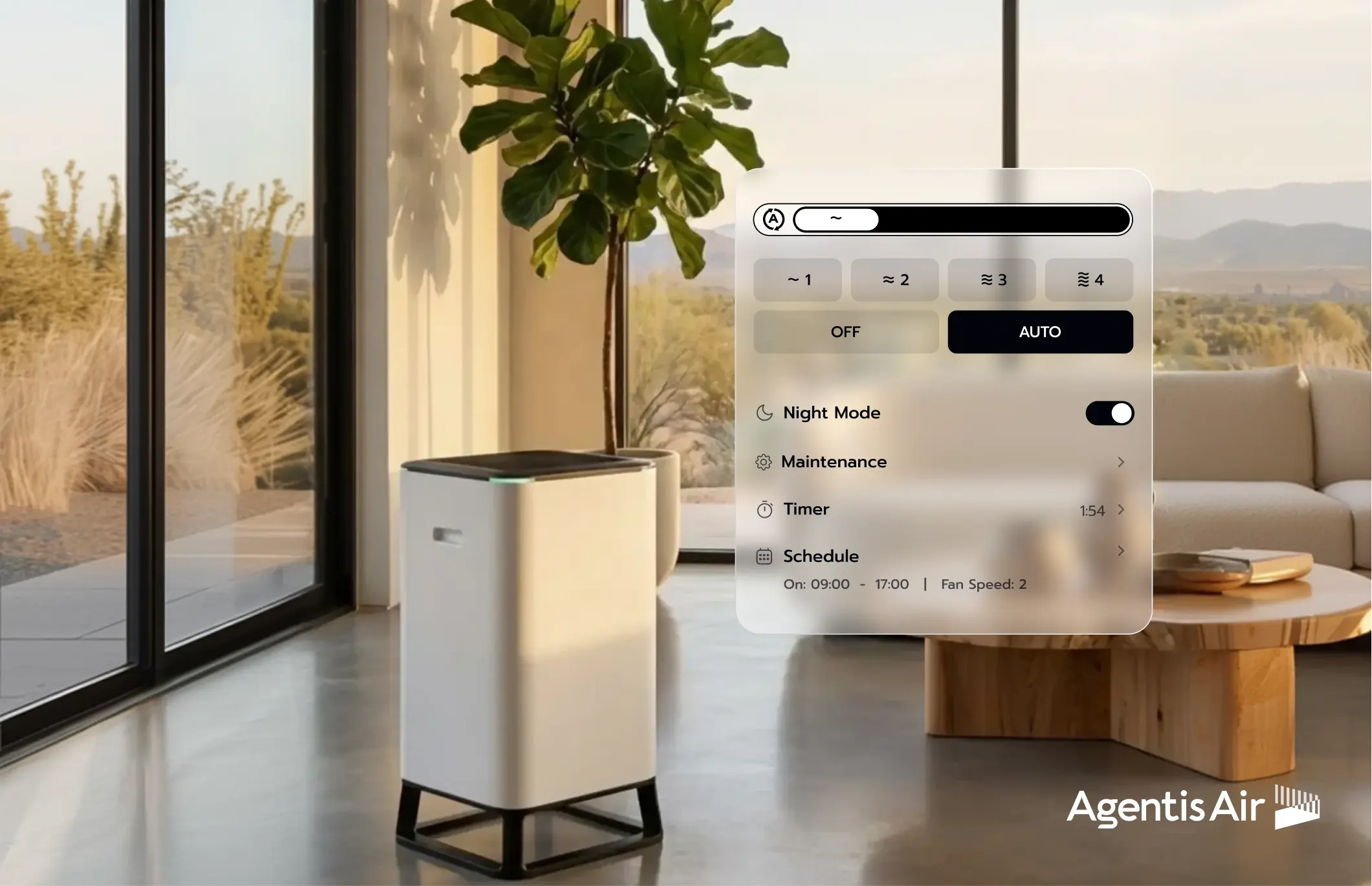
Enable more advanced scheduling and control than physical buttons allow
Improve end-user experience around maintenance
Reduce customer service calls through better guidance inside the app
As a small, hardware-first company, building a full IoT stack in-house wasn’t an option.
Choosing a Practical Path to Connectivity
Agentis Air explored several ways to add connectivity: building an in-house solution, working with software consultants, or adopting a low-code IoT platform. For a small, mechanical engineering–led team, building internally was ruled out early — hiring and running a software team was simply out of scope.
"I did consider software consultants," Alan explains. "But that meant I'd still need to hire someone to manage them and handle the ongoing backend support. That was a lot of work to avoid."
What ultimately stood out about a low-code approach was pragmatism. It allowed Agentis Air to add advanced, connected features without new hires or long-term software ownership. By choosing Blynk, Agentis Air could focus on hardware and filtration while partnering with an experienced IoT team to handle the application and backend.
The Solution: Connected Guidance, Not Just Data
Hardware: Agentis Air proprietary hardware with NCP (Network Co-Processor) module Connectivity: WiFi + embedded sensors, Blynk.NCP solution Software: Blynk IoT Platform, Branded IoT Apps, Enterprise Plan Implementation time: 6 months from concept to beta launch
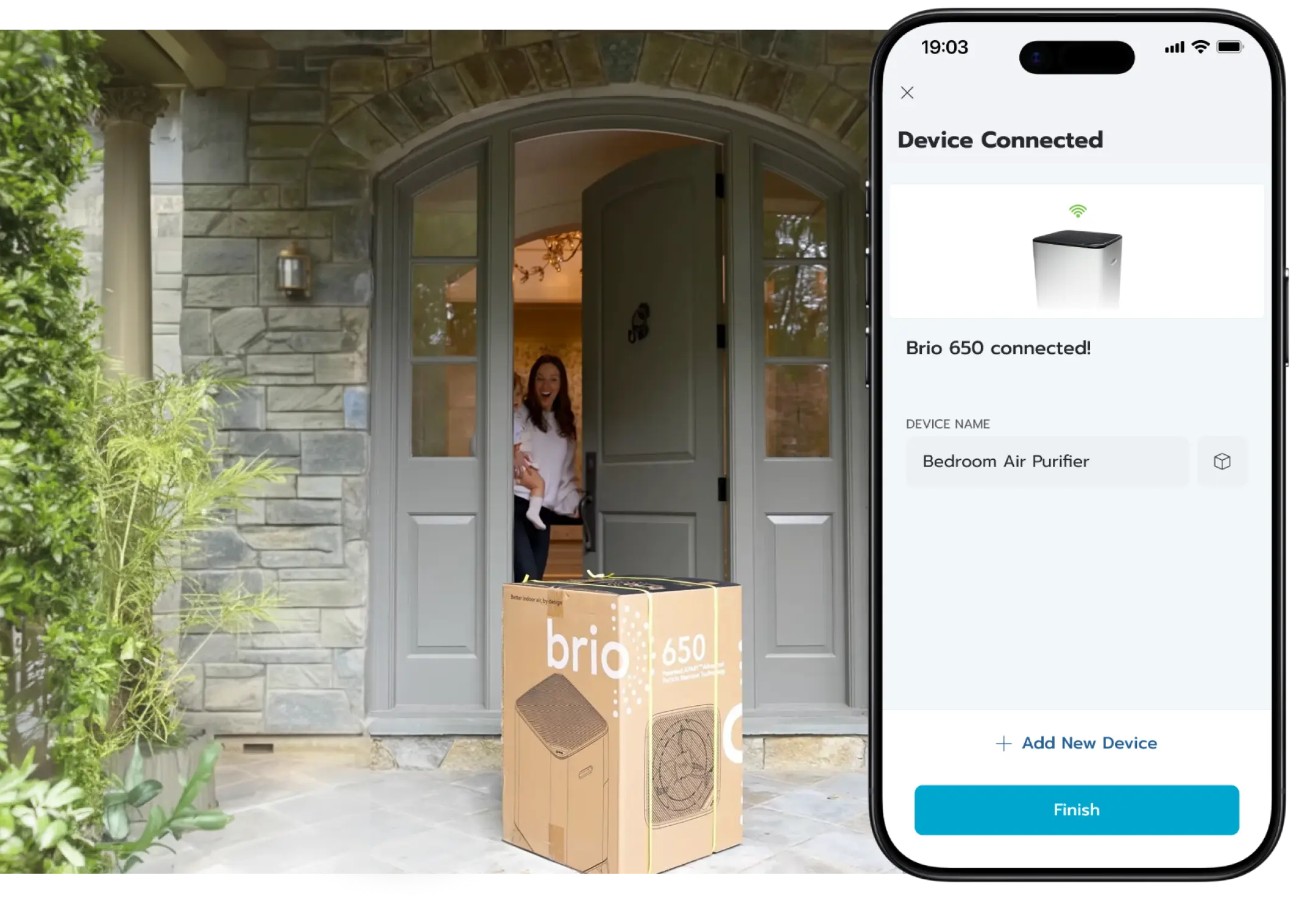
Using Blynk's Network Co-Processor solution, Agentis Air added connectivity without rewriting their existing device firmware. They chose the Enterprise Plan specifically to partner with Blynk's design team rather than learning the full platform themselves, letting them focus entirely on the product engineering.
Agentis Air introduced connectivity that supports both users and the internal team:
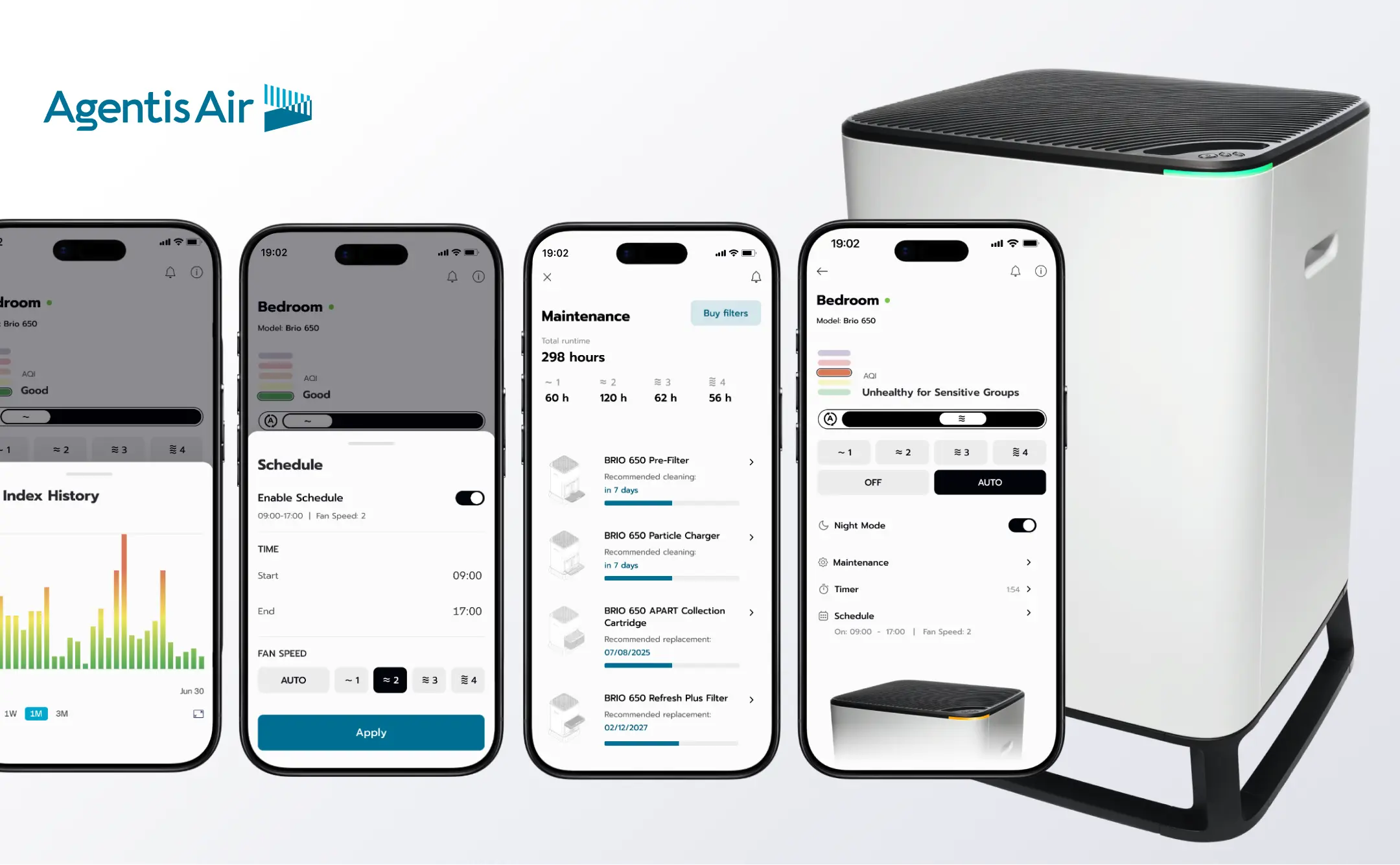
A branded app experience that complements their high-end device
Advanced scheduling and control beyond on-device interfaces
In-app maintenance reminders, instructions, and videos
Notifications for errors and service needs
Real-time device visibility and flexible user management for commercial customers
Over-the-air firmware updates for continuous improvement
“For us, the biggest value isn’t just data — it’s also education,” Alan says. “Being able to guide users through maintenance inside the app reduces confusion and support calls.”
Why Blynk Worked for Agentis Air
Blynk fit Agentis Air’s reality as a small, product-driven team.
What stood out:
Fast retrofitting: Blynk.NCP solution allowed to add the connectivity without rewriting the main device firmware
Low-code, no-infrastructure burden: No need to hire developers or manage servers
Fast, professional UX delivery: Early prototypes and rapid iteration through Blynk’s design process
Enterprise-grade capabilities: OTA firmware updates, advanced automations, and multi-tenant device management
Advanced integrations: A strong foundation for the future building management system integrations
“The OTA updates alone have already been incredibly valuable for us internally,” Alan notes. “It lets us test and improve without touching the hardware.”
Impact: Ready for Commercial Growth
Agentis Air’s connected version of air purifier is currently in beta, with final certifications underway. Even at this stage, the benefits are clear:
Fewer service interactions through better user guidance
A strong offering for commercial customers managing multiple units
A more competitive, modern product experience complementing the high-end product
A scalable foundation for future products and BMS integrations
Connectivity also positions Agentis Air well as industry standards evolve. New regulations around indoor air quality — driven by COVID-19 and wildfire exposure — are increasingly recognizing air purifiers as part of commercial building strategies.
Looking Ahead
As the connected version of the product approaches full launch, Agentis Air is focused on learning from real-world usage. The team’s priority is understanding how customers use the app, where guidance adds the most value, and what to build next.
Looking back, adding connectivity proved far more practical than expected.
“I wish we had done this at the start,” Alan reflects. “It wasn’t nearly as big a hurdle as I thought — and it would have saved us time and rework.”
With a scalable IoT foundation in place, Agentis Air is now positioned to support larger commercial deployments and future building management integrations, while staying focused on product performance and simplicity.
What surprised me most was how manageable the process turned out to be. We were able to add connectivity without taking on backend ownership or building a software team, which made a big difference for us.
Alan Viosca, Director of Product Development at Agentis Air






.png)